



Table of Contents

Providing dependable home care support requires strong communication, accurate scheduling, and consistent follow-through. Yet many care providers struggle with daily operational challenges that drain time and reduce service quality.
Where it all started
This was the experience of a mid-sized Chinese-American home care company serving both English- and Mandarin-speaking families. The organization had dedicated caregivers but lacked an efficient system for managing incoming calls, client requests, and administrative tasks. As demand grew, the company needed a better way to handle its multilingual customer service needs without compromising the personal touch that families expected.
Their eventual transformation showed how strategic outsourcing, particularly through Chinese-speaking virtual assistants, home care virtual assistants, and English-speaking virtual assistants, can turn operational stress into a streamlined and scalable service model.
The Growing Pressure on Multilingual Home Care Providers
Home care companies face rising client expectations related to responsiveness, cultural understanding, and language accessibility. For providers that serve bilingual or multilingual communities, these expectations are even higher. Families want to speak with someone who understands their language and cultural nuances, especially when discussing sensitive care needs.
Before restructuring their operations, the Chinese-American care company encountered several obstacles:
- High call volumes and missed inquiries
Intake calls, appointment reminders, and caregiver call-offs often arrived simultaneously. Staff struggled to answer all inquiries promptly. - Language mismatches
Mandarin- and Cantonese-speaking families needed support in their native language, but the internal team could only handle a limited number of bilingual interactions. This caused delays and confusion. - Administrative tasks are pulling staff away from clients
Scheduling changes, client updates, and documentation took valuable time away from delivering hands-on care. - Inconsistent customer service quality
With limited staffing, response times varied, and follow-up tasks occasionally fell through the cracks.
These challenges made it difficult for the company to maintain the warm, community-focused service for which its brand was known.
Why the Company Chose a Virtual Assistant Solution
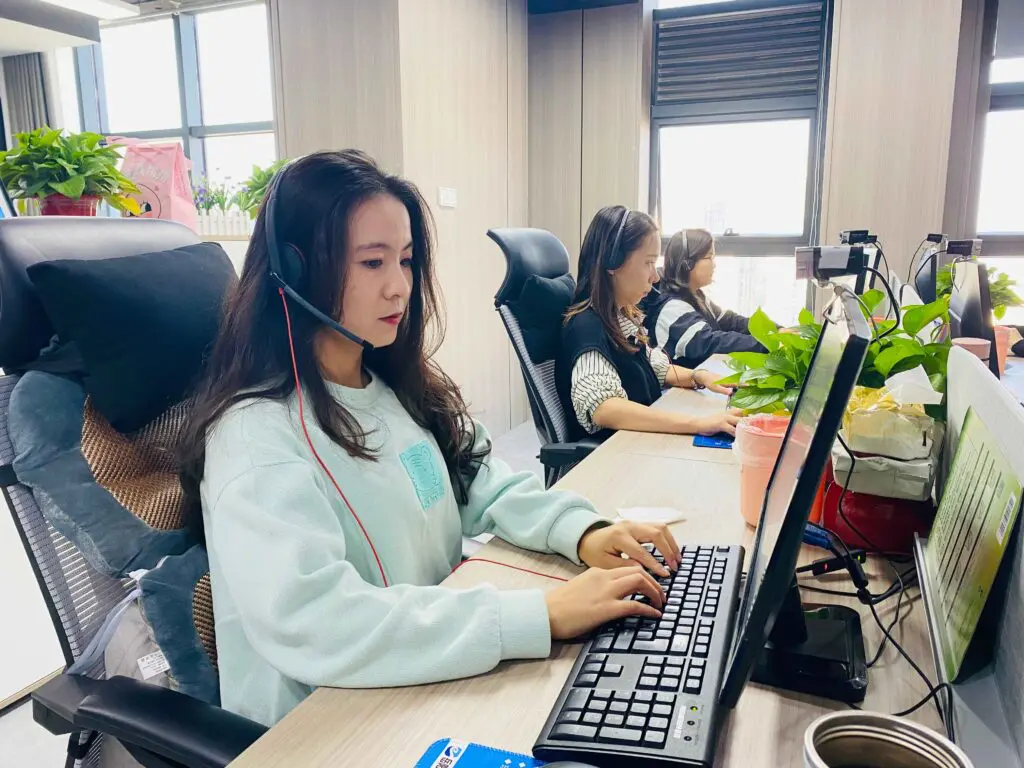
To solve its operational challenges, the company evaluated several options. Hiring additional staff locally was expensive and time-consuming. Implementing new software helped with scheduling, but did not solve communication gaps.
The breakthrough came when leadership discovered how Chinese-speaking virtual assistants, home care virtual assistants, and English-speaking virtual assistants could support their frontline operations. This model offered several advantages:
- The ability to provide bilingual support for Mandarin- and English-speaking families.
- Access to skilled administrative talent familiar with the home care and healthcare sectors.
- Scalable staffing without the cost of office space, benefits, or lengthy onboarding.
- Coverage during peak hours or after-hours periods when the in-house team was unavailable.
Most importantly, virtual assistants allowed the company to maintain a warm and personalized customer experience, even as its call volume increased.
The Transformation: Step-by-Step Operational Improvements
The care company’s transition to a virtual assistant-supported model did not happen overnight. It was a phased and carefully structured process designed to reduce risk and ensure smooth adoption.
1. Strengthening Customer Communications
The first step was assigning Chinese-speaking virtual assistants and English-speaking virtual assistants to handle inbound calls, triage client concerns, and support new inquiries. VA agents followed clear scripts aligned with the company’s communication standards. This provided consistency while ensuring families received assistance in the language they felt most comfortable using.
Within weeks, the company saw a measurable improvement in call response times and a noticeable drop in missed inquiries.
2. Streamlining Client Intake
Home care virtual assistants were trained to handle intake forms, document client needs, and submit information directly into the company’s management system. This eliminated paperwork delays, allowing care coordinators to focus on conducting assessments and assigning caregivers.
Intake accuracy also improved because virtual assistants had a dedicated focus and were not juggling field responsibilities.
3. Supporting Scheduling and Daily Operations
With proper access and permissions, virtual assistants monitored daily schedule changes, updated caregiver assignments, and followed up with clients or families as needed. When caregivers were running late, VAs proactively called clients to keep them informed.
This led to more predictable daily operations and reduced the burden on the internal scheduling team.
4. Enhancing Family Follow-Up
Virtual assistants also supported follow-up calls, satisfaction checks, and updates to documentation. These tasks helped the company strengthen relationships with families while maintaining compliance with home care standards.
Families reported higher satisfaction due to more frequent communication and reliable responses.
Visible Results and Long-Term Benefits
After integrating virtual assistants into its operations, the Chinese-American care company experienced significant improvements in its service delivery and overall efficiency. While specific data varies across organizations, the following benefits are widely documented across the home care industry and reflected in the company’s experience:
- Faster response times and fewer missed calls during peak hours.
- Higher client satisfaction, especially from Mandarin-speaking families who appreciated culturally sensitive communication.
- More consistent scheduling processes and fewer last-minute miscommunications.
- Reduced administrative pressure on in-house staff.
- Improved caregiver coordination, helping retain workers and reduce burnout.
- Stronger operational flexibility allowed the company to scale without large payroll expansions.
Most importantly, the company restored its ability to focus on what mattered most: providing dependable, compassionate care.
Why More Care Companies Are Turning to Virtual Assistants
The home care industry continues to grow, and providers increasingly look for efficient ways to serve multilingual communities. Virtual assistants offer an affordable and reliable solution for handling administrative tasks, customer service, and language-specific communication needs.
Chinese-speaking virtual assistants, English-speaking virtual assistants, and home care virtual assistants have proven especially valuable for companies serving Asian-American communities or diverse client populations. They help bridge language gaps, maintain high service standards, and build stronger family trust.
As home care evolves, virtual support models are becoming essential tools for companies seeking scalable and culturally inclusive service operations.
Conclusion: Partnering With Callnovo for Scalable, Multilingual Home Care Support
The transformation of this Chinese-American home care company demonstrates how the right operational strategy can turn daily challenges into lasting strengths. Callnovo has become a trusted partner for care providers seeking reliable support, multilingual communication, and streamlined processes. With a dedicated team of Chinese-speaking virtual assistants, home care virtual assistants, and English-speaking virtual assistants, Callnovo helps agencies manage intake, scheduling, caregiver coordination, and customer service with accuracy and compassion.
Callnovo’s remote staffing solutions empower home care organizations to scale without sacrificing quality. Families receive the clear, culturally sensitive communication they expect, while care teams gain the administrative relief needed to focus on delivering hands-on support.
For home care providers looking to improve efficiency, strengthen client satisfaction, and build a multilingual service experience, Callnovo offers the tools and talent to create real operational transformation.
It’s time to make the smarter move.
Company Name: Callnovo Inc.
Contact Person: Anita Lee
Email: anita.lee@callnovo.com.cn
Website: www.callnovo.com
Country: Canada
City: Toronto
Explore the benefits of a Home Care Virtual Assistant:
https://callnovo.com/callnovo-multilingual-remote-virtual-assistant/
Ready to get a customized quote?
Click here: https://callnovo.com/request-a-quote/